
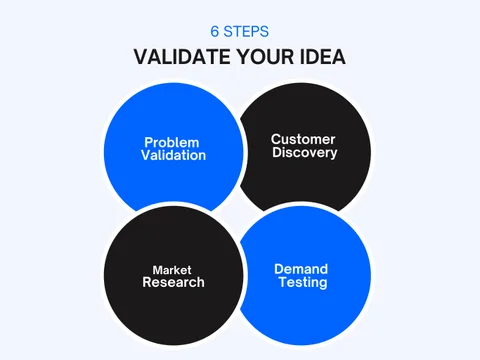
So many founders build first and validate later — which is exactly backwards. Learning how to validate a startup idea before launching saves months of wasted effort on something nobody actually wants.
I’ve watched talented people spend a year building a product, only to discover in week one after launch that the market simply wasn’t there. That’s an avoidable, painful mistake.
What Idea Validation Actually Means
Quick answer: to validate a startup idea, you need to confirm real people have the problem you think they have, that they’re willing to pay to solve it, and that your specific solution genuinely appeals to them — all before writing a single line of code or spending serious money.
Step 1: Talk to Potential Customers Directly
Have at least 15-20 conversations with people who match your target customer. Ask about their current problem and how they solve it now — not whether they’d buy your specific product, which tends to produce overly polite, unreliable answers.
Step 2: Look for the Problem, Not Just Interest
People will say they’re “interested” in almost anything to be polite. What actually validates an idea is discovering the problem causes real pain — wasted time, lost money, ongoing frustration — that they’re actively trying to solve already.
Step 3: Check if People Are Already Paying for Something Similar
If competitors or adjacent solutions already exist and people are paying for them, that’s often a stronger validation signal than a completely novel idea nobody currently pays for anything similar to.
Step 4: Create a Simple Landing Page
Before building the full product, a basic landing page describing your solution, with a way to sign up or pre-order, tests real interest far more reliably than opinions alone.
Step 5: Run a Small Paid Test
Even a tiny ad budget — ₹1,000-₹2,000 — driving traffic to your landing page reveals whether strangers, not just friends being polite, actually respond to your specific offer.
Step 6: Try a Manual or “Fake Door” Version First
Before building a full product, manually deliver the service yourself to a handful of early customers. This “concierge” approach reveals real problems and demand without significant upfront investment.
Step 7: Set a Clear Validation Threshold Beforehand
Decide in advance what counts as validation — say, 20 people willing to pre-pay a deposit — so you’re not unconsciously moving the goalposts to justify continuing with an idea that isn’t working.
Signs Your Idea Might Not Be Validated Yet
- People are “interested” but nobody’s willing to pay anything
- You’re the only one who seems excited about solving this problem
- Similar solutions exist but nobody actually uses them consistently
- Feedback is consistently vague rather than specific and detailed
FAQs
How many people should I talk to before validating a startup idea? Around 15-20 target customer conversations generally give you enough pattern recognition to spot real validation signals versus polite interest.
Is a landing page enough to validate a startup idea? It’s a strong first signal, especially combined with actual sign-ups or pre-orders, though direct customer conversations remain equally important.
What if people say they like my idea but won’t pay anything? This usually means the idea isn’t validated yet — genuine validation requires some form of real commitment, whether money, time, or data.
How long should idea validation take before building the full product? This varies, but most focused validation efforts can be completed within 4-8 weeks with consistent, deliberate effort.
Can I validate a startup idea without any money? Yes, direct customer conversations and manual “concierge” testing can validate ideas with minimal to no financial investment.
Conclusion
Learning how to validate a startup idea before building anything substantial is one of the highest-leverage things a founder can do. Talk to real potential customers, look for genuine pain rather than polite interest, and set a clear threshold for what validation actually means before you start. This week, commit to having five real conversations with your target customers before writing another line of code.