
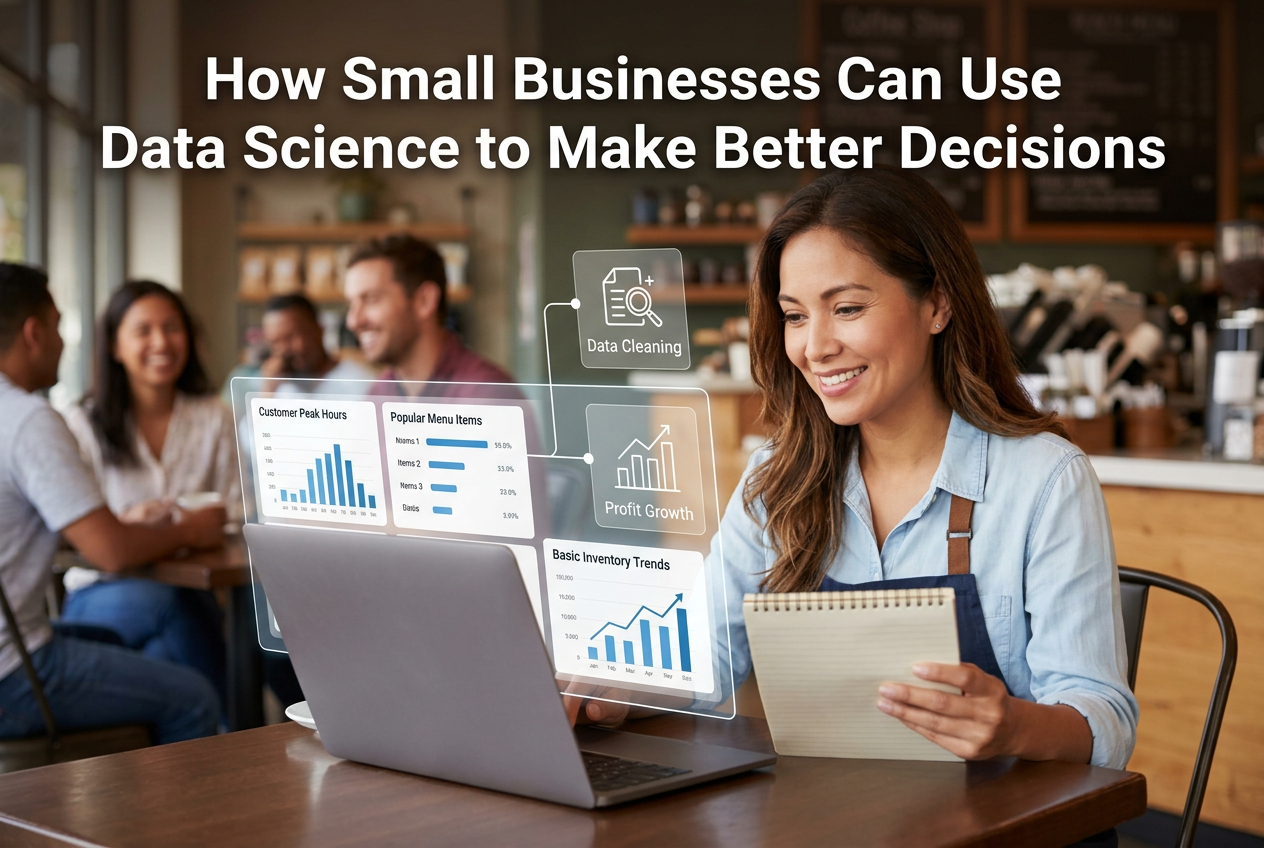
Small businesses make decisions every day about pricing, inventory, customer service, marketing and operating costs. These decisions are often based on experience, but business records can provide additional evidence about what is working and where improvements may be possible.
Data science does not have to begin with expensive software or complex artificial intelligence systems. Many businesses can gain useful insights from sales spreadsheets, customer records and basic dashboards. The important step is to identify a meaningful question and use reliable information to answer it.
1. Start with the Data a Business Already Has
A small business may already collect information through invoices, point-of-sale systems, website analytics, customer enquiries and inventory records.
Before investing in new tools, owners can review what is available and whether it is accurate. Duplicate entries, inconsistent product names and missing dates can make reports unreliable, so basic data cleaning is often an essential first step.
A simple monthly report showing revenue, expenses, sales by product and repeat purchases can provide a useful starting point.
2. Understand Customer Preferences
Customer purchase history can reveal which products are popular, how frequently customers return and when demand tends to change.
For example, a local retailer may notice that some products sell more frequently during particular seasons. That information can inform purchasing decisions and promotional planning.
Customer feedback can also reveal recurring concerns. Businesses can categorise complaints, examine return reasons and identify areas where product information or service processes need improvement.
Any use of customer information should follow applicable privacy requirements and avoid collecting unnecessary personal details.
3. Improve Inventory Management
Holding too much inventory can tie up cash, while holding too little can lead to missed sales. Reviewing product movement and seasonal patterns can help businesses make better purchasing decisions.
A basic inventory analysis may compare quantities sold, current stock and supplier lead times. Businesses can identify slow-moving products and determine which items need more frequent monitoring.
More advanced forecasting may be useful when sufficient reliable historical data is available. However, forecasts should be reviewed against actual demand because unexpected events can disrupt established patterns.
4. Measure Marketing Performance
Small businesses may promote their products through social media, search engines, email and local campaigns. Measuring enquiries and sales by channel can help determine which activities are producing useful results.
For example, a business could compare the number of enquiries generated by two campaigns with the number that became paying customers. This provides a more meaningful view than looking at clicks or likes alone.
Owners should ensure that tracking methods are consistent and avoid assuming that a campaign caused a sales increase simply because both occurred at the same time.
5. Monitor Costs and Cash Flow
Data analysis can help small businesses understand their operating expenses, revenue patterns and cash flow.
A monthly review may reveal that delivery expenses have increased, a product has lower margins than expected or certain customers regularly pay late. These findings can support practical decisions about pricing, supplier arrangements and payment processes.
The analysis does not need to be complicated. Clear definitions and regular monitoring are often more valuable than an elaborate dashboard that nobody uses.
6. When Should a Business Consider Data Science Tools?
Spreadsheets may be sufficient for simple reporting. As the volume and complexity of data increase, businesses may benefit from database queries, automated reports or specialised analytics tools.
Python can support data cleaning and repeated calculations. SQL can retrieve information from databases, while business intelligence tools can present key metrics in dashboards.
Machine learning may be useful for specific tasks such as demand forecasting or identifying unusual transactions, but it requires suitable data and careful evaluation. Small businesses should consider implementation and maintenance costs before adopting more advanced solutions.
7. The Value of Data Skills
People who understand business data can help organisations turn records into practical insights. Relevant skills include spreadsheet analysis, SQL, Python, basic statistics, visualisation and the ability to explain findings clearly.
Learners can practise with sample datasets before applying the same methods to more complex business problems. Those evaluating structured programs, including NUCOT data science offering, should examine the curriculum, practical projects, support and course terms before deciding whether it suits their goals.
Conclusion
Data science can help small businesses understand customers, improve inventory planning, assess marketing performance and monitor costs. The process does not need to start with sophisticated AI systems.
Begin with a clear business question, use reliable records and review the findings regularly. By combining data with practical experience, small businesses can make better-informed decisions and focus resources on the areas most likely to improve performance.