
Most startup stories people hear are either pure success or complete failure. This startup turnaround case study covers something less commonly discussed — a company that came genuinely close to shutting down, then course-corrected and survived, with real setbacks along the way rather than a clean, tidy arc.
I’ve followed this founder’s journey somewhat closely over the past few years, and what’s most instructive isn’t the eventual recovery — it’s exactly what went wrong first.
The Original Problem
The startup, a B2B software tool for small retail businesses, had raised a modest seed round and spent nearly a year building features based on founder assumptions rather than direct customer validation. By month fourteen, revenue was far below projections, and the runway had shrunk to roughly two months.
What Went Wrong Initially
This startup turnaround case study reveals a pattern common to many failing startups: the team had built an impressively feature-rich product that solved problems customers hadn’t actually prioritized, while genuinely painful, simpler problems went unaddressed.
- Product had 40+ features, but customers regularly used only 3-4 core ones
- Customer acquisition cost was nearly triple the customer’s lifetime value
- Founders had been avoiding direct customer feedback conversations for months, sensing the news would be bad
The Turnaround Decision Point
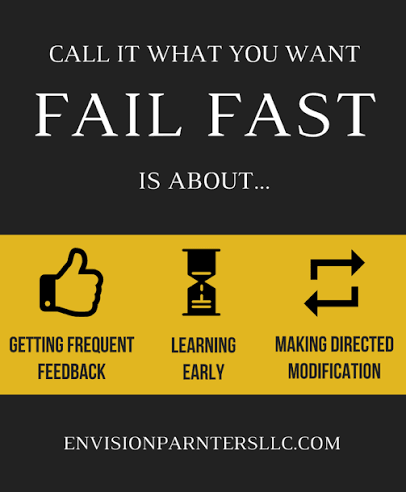
With roughly two months of runway remaining, the founders made a difficult but necessary decision — they paused all feature development entirely and spent three weeks doing nothing but direct customer interviews, essentially restarting the validation process they’d skipped originally.
What They Learned From Customers
The interviews revealed customers actually wanted a dramatically simplified version focused on just inventory tracking and basic invoicing — features that already existed but were buried under unnecessary complexity. Customers weren’t asking for more features; they were asking for less friction using the few they actually needed.
The Pivot That Followed
- Stripped the product down to its three most-used core features
- Rebuilt the onboarding flow to get new users to value within their first five minutes
- Changed pricing from a complex tiered structure to a single, simple monthly rate
- Focused all remaining marketing budget on the specific customer segment showing the strongest retention
The Results
Within four months of this startup turnaround case study pivot, monthly churn dropped significantly, and customer acquisition cost improved enough to approach sustainable unit economics. The company didn’t become a massive success story overnight, but it survived, stabilized, and eventually raised a follow-on round based on genuinely improved metrics rather than just a compelling pitch.
Honest Lessons From the Turnaround
The founders later admitted the near-failure was almost entirely avoidable had they validated more rigorously from the start. The turnaround worked not because of a single brilliant insight, but because they were willing to strip away significant sunk-cost investment in features nobody wanted, which is genuinely difficult emotionally, even when it’s clearly the right business decision.
[link to related guide about validating your startup idea here]
FAQ
Can a startup really recover from near failure? Yes, as this case shows, though it typically requires honest reassessment and willingness to make difficult, sometimes painful changes quickly.
What usually causes early-stage startups to nearly fail? Building based on assumptions rather than direct customer validation is a consistently common cause, as seen in this specific case.
How important is simplifying a product during a turnaround? Very important in this case — removing unused complexity and focusing on core value often matters more than adding new features.
Should struggling startups pause development to talk to customers? This case suggests yes, since direct customer interviews revealed the actual problem far faster than continued internal development would have.
What is the biggest lesson from this startup turnaround case study? That validating with real customers early is far cheaper than discovering the same lessons after a year of building the wrong things.
Conclusion This startup turnaround case study shows that near-failure isn’t always the end — sometimes it’s the forced reset a business genuinely needed. If your own startup feels stuck, consider whether the fix requires more features, or simply removing the ones that are getting in customers’ way.