
Bidding platforms train freelancers to compete almost entirely on price, which is exactly why so many freelancers feel stuck earning far less than their skills deserve. Learning to find freelance clients outside these platforms changes the entire dynamic, because you’re no longer one of fifty identical-looking bids in someone’s inbox.
I stopped using bidding sites almost entirely a few years into freelancing, and honestly, my average project value roughly doubled within six months.
Why Bidding Sites Aren’t the Best Way to Find Freelance Clients
Learning to find freelance clients through direct outreach and relationships, rather than bidding platforms, generally leads to better-paying clients who value expertise over the lowest possible price.
Leverage Your Existing Network First
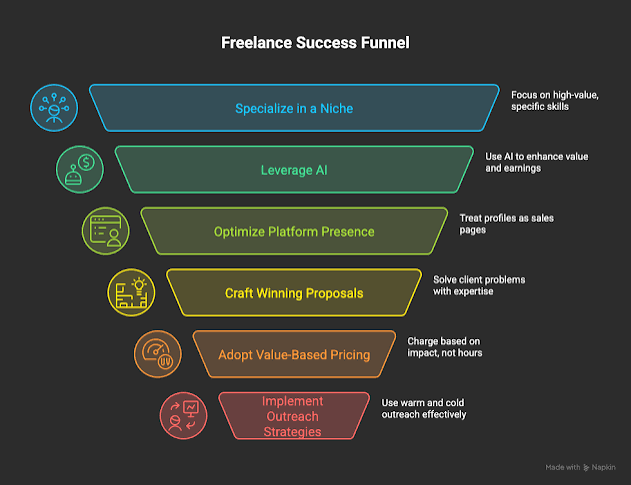
Before searching strangers, look at your current network — former colleagues, past clients, industry acquaintances. A surprising number of freelancers land their best-paying clients through someone they already knew, rather than cold outreach entirely.
Use LinkedIn Strategically, Not Just Passively
Simply having a LinkedIn profile isn’t enough. Actively posting relevant insights, commenting thoughtfully on posts from your target client industry, and reaching out with genuinely specific, non-generic messages consistently outperforms passive profile browsing.
Cold Email With Genuine Specificity
Generic cold emails get ignored, or worse, marked as spam. Effective outreach to find freelance clients references something specific about the recipient’s business — a recent launch, a specific gap you noticed, a genuine compliment backed by detail — rather than a copy-pasted template.
- Research the prospect for at least 5-10 minutes before reaching out
- Lead with value or insight, not immediately with your services pitch
- Keep the first message short — under 150 words generally performs better
Build a Portfolio That Attracts, Not Just Displays
A portfolio site optimized for relevant search terms can passively attract inbound inquiries over time, essentially working as a 24/7 salesperson. This takes longer to build momentum than outreach but compounds nicely alongside it.
Ask Existing Clients for Introductions
Happy clients often know other people who need similar work, but they rarely think to make introductions unless specifically asked. A simple, direct request — “do you know anyone else who might need this kind of help?” — regularly surfaces new opportunities.
Position Yourself as a Specialist, Not a Generalist
Clients tend to pay premium rates for specialists over generalists. “I write blog content for SaaS companies” attracts better-paying, more targeted inquiries than “I’m a content writer,” even though the second description is technically broader.
Attend Industry Events, Even Virtual Ones
Webinars, virtual conferences, and local meetups in your target client’s industry (not just your own freelance niche) put you in front of genuine potential clients rather than other freelancers competing for the same work.
Follow Up Persistently But Respectfully
Most freelance inquiries don’t convert on the first message. A polite follow-up sequence over several weeks, adding new value or context each time rather than just “checking in,” significantly increases response and conversion rates.
[link to related guide about setting freelance rates as a beginner here]
FAQ
Are bidding sites bad for freelancers? They’re not inherently bad, but they often encourage price competition that undervalues skilled freelancers compared to direct outreach.
How do I find freelance clients without cold calling? Leveraging your existing network, LinkedIn engagement, and client referrals are effective methods that don’t require cold calling.
What makes a cold email to a potential client effective? Genuine specificity about the recipient’s business, combined with a short, value-first message, significantly improves response rates.
Should freelancers specialize in a niche? Yes, specialization generally attracts better-paying clients who value specific expertise over generalist services.
How long does it take to build a steady freelance client base? This varies, but consistent outreach and relationship-building typically show meaningful results within three to six months.
Conclusion Learning to find freelance clients beyond bidding platforms takes more upfront effort than submitting proposals on a marketplace, but it consistently leads to better-paying, more respectful client relationships. Start this week by reaching out to three people in your existing network you haven’t contacted in a while.