
Pricing is where most new freelancers freeze up completely. Set freelance rates for beginners too low, and you’ll be overworked and underpaid within months. Set them too high without justification, and you’ll struggle to land your first few clients at all.
I remember my own first freelance quote — I basically guessed a number that felt “safe,” and it took me nearly a year to realize I was charging roughly half of what similarly skilled freelancers were earning.
The Real Approach to Setting Freelance Rates as a Beginner
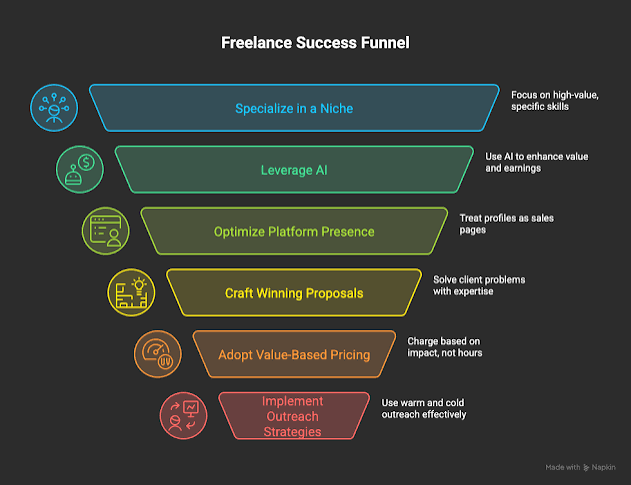
Setting freelance rates for beginners properly involves calculating your actual required income, researching market rates realistically, and pricing based on value delivered rather than just hours worked.
Calculate Your Baseline Number First
Before looking at what others charge, figure out your own minimum viable rate — total monthly expenses plus savings goals, divided by realistic billable hours per month (accounting for non-billable time spent on admin, marketing, and finding clients). This baseline protects you from underpricing out of fear.
Research Market Rates Honestly
Look at what freelancers with similar experience levels charge in your specific niche and region. Freelance rates for beginners should generally start slightly below experienced freelancers, but not so low that it signals lack of confidence in your own skills.
Consider Project-Based Pricing Over Hourly
Hourly rates can actually penalize efficiency — the faster and better you get, the less you earn per project. Project-based pricing, once you can estimate scope accurately, rewards skill and speed rather than just time spent.
- Estimate hours needed, then price based on value delivered, not just time
- Include buffer time for revisions in your project quote
- Communicate clearly what’s included and what counts as extra scope
Don’t Undervalue Based on Fear of Rejection
A common trap in freelance rates for beginners thinking is assuming a lower rate guarantees more clients. In reality, unreasonably low rates sometimes signal lower quality to potential clients, and they also attract clients who are harder to work with and quicker to demand scope creep.
Raise Rates as You Gain Experience and Portfolio
Your rates shouldn’t stay static. Every few months, or after completing notable projects, reassess whether your rates still reflect your growing skill and portfolio. Existing clients can often be grandfathered temporarily while new clients pay updated rates.
Factor in All Your Actual Costs
Freelancers often forget to price in software subscriptions, taxes (which can be substantial for self-employed income), equipment, and time spent on unpaid work like proposals and client communication. All of this needs to be baked into your effective rate, not treated as separate overhead you absorb silently.
Be Confident When Quoting
Hesitant, apologetic pricing conversations often lead to clients pushing back harder. Quoting your rate clearly and calmly, without over-explaining or immediately offering a discount, generally results in better client relationships and fewer negotiation battles.
[link to related guide about finding high-paying freelance clients here]
FAQ
How do I calculate freelance rates as a beginner? Start with your required monthly income divided by realistic billable hours, then adjust based on market research for your specific niche.
Should beginners charge hourly or project-based rates? Project-based pricing often works better long-term since it rewards efficiency and skill rather than just time spent on a task.
Is it bad to charge low rates when starting out? Extremely low rates can signal lower quality and attract difficult clients, so it’s better to price reasonably even as a beginner.
How often should freelancers raise their rates? Every few months or after significant portfolio growth, reassessing rates ensures they reflect your current skill level and demand.
Do freelancers need to account for taxes in their rates? Yes, self-employed tax obligations can be substantial and should be factored into your effective hourly or project rate.
Conclusion Setting freelance rates for beginners correctly protects both your income and your confidence as you build your freelance career. Calculate your real baseline number this week, compare it honestly against market rates, and quote your next client with confidence rather than apology.