Every salesperson hears the same handful of objections over and over — price, timing, “I need to think about it.” Handling sales objections well isn’t about having a clever comeback for each one; it’s about understanding what’s really being said underneath the words.
I’ve noticed newer salespeople often panic the moment an objection comes up, treating it like a rejection. Experienced reps treat it as information.
The Real Skill Behind Handling Sales Objections
Handling sales objections effectively means listening for the actual concern behind the stated objection, since “it’s too expensive” often really means “I don’t yet see enough value to justify this cost.”
The “It’s Too Expensive” Objection
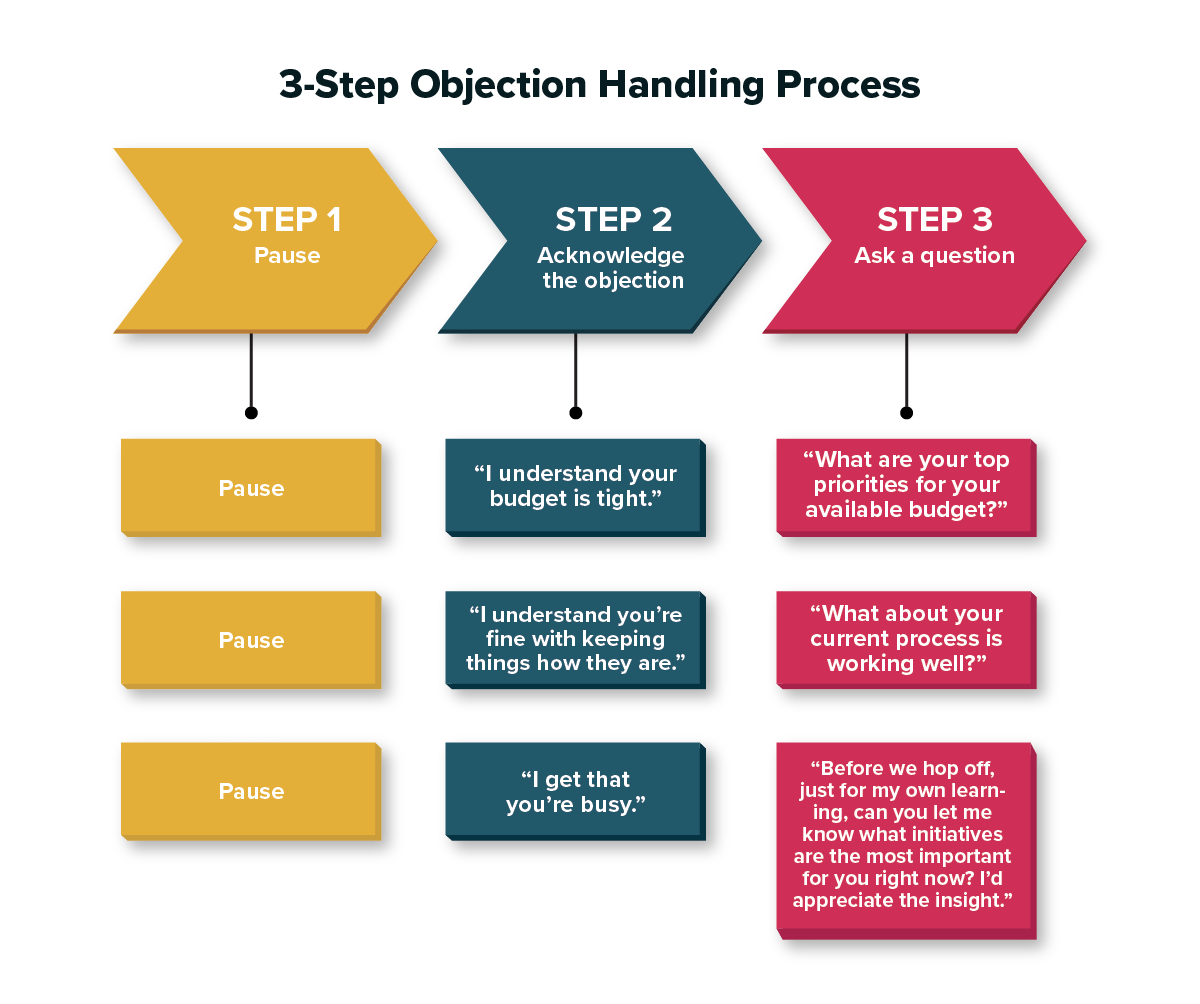
This is rarely purely about the number itself. It usually means the prospect hasn’t connected the price to a clear enough value or outcome yet. Instead of immediately discounting, try: “I hear you — can I ask what you’re comparing this cost against?” This often reveals whether it’s a genuine budget constraint or an unclear value perception.
The “I Need to Think About It” Objection
This is often a polite way of saying “I’m not fully convinced, but I don’t want to say why directly.” A useful response: “Of course — just so I can send over anything that might help, is there a specific part you’re still weighing?” This gently uncovers the real hesitation.
The “We’re Already Using a Competitor” Objection
Rather than badmouthing the competitor, which usually backfires, ask genuinely curious questions: “That’s great, how’s it working out so far?” Their answer often reveals gaps or frustrations your product could address, without you needing to criticize anything.
The “Not the Right Time” Objection
- Ask what would need to change for the timing to feel right
- Find out if there’s a specific trigger event they’re waiting for
- Offer to follow up at a specific, agreed time rather than leaving it vague
Don’t Rush to Respond Immediately
Handling sales objections well often requires a brief pause before responding, rather than immediately jumping into a rehearsed counter. A short pause signals you’re actually considering what they said, not just waiting for your turn to talk.
Use Objections as Information, Not Obstacles
Objections tell you exactly what’s standing between the prospect and a decision. Reframing them mentally as useful information, rather than as rejection or failure, changes how confidently and calmly you respond.
Practice, But Don’t Over-Script
Rehearsing responses to common objections builds confidence, but delivering them robotically undermines trust. The goal is internalizing the underlying principle behind each response, then adapting it naturally to each specific conversation.
[link to related guide about cold calling scripts that convert here]
FAQ
What’s the best way to handle the price objection in sales? Ask what the prospect is comparing the price against, which often reveals whether it’s a budget issue or unclear value perception.
How do you respond to “I need to think about it”? Ask genuinely what specific aspect they’re still weighing, which often surfaces the real hesitation behind the polite deflection.
Should you badmouth competitors when handling objections? No — asking curious, non-critical questions about their current solution usually works far better than direct criticism.
Are sales objections always a bad sign? Not at all — objections often indicate genuine engagement and interest, since a completely uninterested prospect usually just disengages instead.
How can I get better at handling sales objections? Practice common responses to internalize the principles, then adapt naturally rather than reciting memorized scripts word-for-word.
Conclusion Handling sales objections well is less about clever rebuttals and more about genuine curiosity toward what’s actually holding a prospect back. Next time you hear a common objection, pause, ask one clarifying question before responding, and see how the conversation shifts.