
Water is something most of us take for granted. We turn on the kitchen faucet, fill a glass, start the washing machine, and get on with the day. But when water leaves mineral stains on your fixtures, gives your laundry an odd tint, or causes plumbing problems, it’s hard to ignore. Suddenly, something as ordinary as turning on a tap becomes a daily frustration.
The trouble is that not all water quality problems have the same cause. Some are related to naturally occurring minerals, while others involve dissolved metals or water chemistry that can affect plumbing. Understanding the difference is the first step toward finding a practical solution.
Three common concerns worth knowing about are hardness, iron, and acidity. Each behaves differently, and each may require a different treatment approach. Once you understand what you’re dealing with, choosing the right equipment becomes much less confusing.
Why Water Quality Problems Deserve a Closer Look
Water quality varies from one property to another. Local geology, the source of the water, municipal treatment, private wells, and household plumbing can all influence what comes out of the tap.
Some issues are easy to spot. You might see white crust around a faucet or reddish-brown marks in a sink. Others are less obvious. Water can appear clear while still having a mineral balance that contributes to scale buildup or corrosion.
It’s tempting to buy a filter as soon as something seems wrong, but that can be an expensive guessing game. A filter designed to improve taste may not solve a hardness problem, and a conventional water softener won’t necessarily address every metal or acidity concern.
Testing provides a better starting point. A qualified water professional or laboratory can help identify the characteristics that matter and recommend suitable treatment based on the results.
Hard Water and the Problem With Mineral Buildup
If you’ve ever scrubbed stubborn white deposits from a showerhead, cleaned cloudy marks off drinking glasses, or wondered why soap doesn’t seem to lather properly, you may be dealing with hard water.
Water hardness mainly comes from dissolved calcium and magnesium. These minerals are naturally present in groundwater as it moves through rocks and soil. They aren’t generally considered a health concern at typical drinking-water concentrations, but they can create plenty of household inconveniences.
When hard water is heated or evaporates, mineral deposits may remain behind. Over time, scale can collect inside kettles, water heaters, pipes, and other equipment. Soap may also react with hardness minerals, leaving residue on bathroom surfaces and making laundry feel less soft.
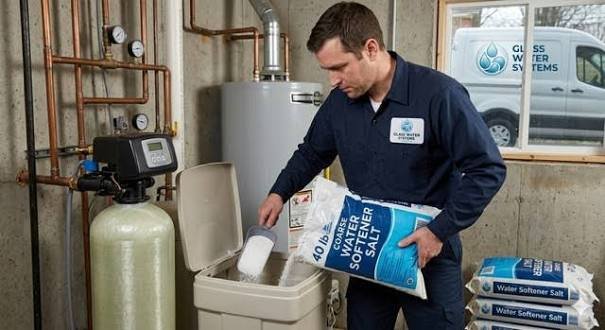
A conventional water softener addresses this problem by exchanging calcium and magnesium ions for other ions, commonly sodium. The result is softer water that can reduce scale formation and make cleaning easier.
However, a softener isn’t the right answer for every water issue. It doesn’t remove all contaminants, and households monitoring sodium intake may want to discuss the system’s effect on drinking water with a qualified professional. In some situations, keeping a separate unsoftened drinking-water tap may be worth considering.
Iron in Water: More Than an Unsightly Stain
Iron is another common water quality concern, particularly in properties that rely on groundwater. It can enter water naturally as it passes through iron-containing soil and rock, although plumbing and other sources may also contribute in some circumstances.
People often notice iron water through its appearance rather than its taste. Water may look yellowish, orange, or reddish, and sinks, toilets, bathtubs, and laundry can develop rust-colored stains. Some people also notice a metallic taste or sediment collecting at the bottom of a container.
The type of iron present matters when selecting a treatment system. Dissolved ferrous iron may initially be invisible, then turn reddish-brown after exposure to oxygen. Ferric iron is already oxidized and may appear as visible particles. Certain waters can also contain iron associated with bacteria, which requires a different approach.
Treatment may involve oxidation and filtration, specialized filter media, or other methods selected for the water’s chemistry and iron concentration. A basic sediment filter might capture some visible particles, but it generally won’t solve every dissolved-iron problem.
Before buying equipment, test for iron and consider checking manganese, pH, and other relevant water characteristics. The results help determine which system is appropriate and reduce the chance of choosing a filter that doesn’t perform as expected.
Acidic Water and the Risk of Corrosion
Not every water problem leaves a visible stain. Sometimes the concern is how water interacts with the plumbing itself.
Water described as acid water has a pH below 7. A reading below 7 indicates acidity, although pH alone doesn’t tell the complete story about how corrosive a particular water supply may be. Other factors, including alkalinity, dissolved minerals, temperature, and plumbing materials, also influence how water behaves.
Naturally acidic water can occur in certain groundwater sources, especially where local geology provides limited buffering. Water chemistry may also change as it moves through a treatment process or distribution system.
When water is corrosive, it can contribute to deterioration of plumbing materials and may increase the release of metals from pipes, solder, or fixtures. The concern depends on the materials present and the specific water conditions. For this reason, a persistent plumbing problem shouldn’t be dismissed as merely cosmetic.
Treatment may involve neutralizing filters, calcite-based media, or other systems designed around the measured chemistry. In some cases, additional corrosion-control measures may be necessary.
If you suspect acidic or corrosive water, professional testing is especially useful. Don’t rely on taste or appearance to determine whether the water is safe. Where lead or copper exposure is a concern, appropriate laboratory testing and advice from local health authorities can help guide the next steps.
Choosing a Treatment System That Fits Your Water
One of the biggest mistakes homeowners make is assuming that a single system will solve every water quality concern. In reality, treatment depends on what testing reveals.
A water softener is generally intended for hardness. Iron treatment equipment targets iron under specified conditions, while neutralizing systems address certain acidity problems. Some properties may need a combination of technologies, installed in the correct order.
Before choosing equipment, consider your household’s water usage, the amount of space available, maintenance requirements, and the ongoing cost of replacement media or filters. Ask what the proposed system is designed to reduce, how its performance is verified, and how often it needs servicing.
It’s also sensible to request a written estimate that separates equipment, installation, maintenance, and any recommended follow-up testing. A cheaper system may not be the better value if it struggles with your water conditions or requires frequent replacement parts.
For private wells, testing should be repeated according to local guidance and potential risks. For municipal supplies, review the water provider’s quality report while remembering that it may not reflect conditions inside your own plumbing.
Everyday Signs Worth Paying Attention To
White mineral deposits, orange stains, metallic tastes, and recurring plumbing problems can all provide clues, but none is a definitive diagnosis on its own. Several water quality issues can produce similar symptoms, and plumbing fixtures may contribute to problems that appear to originate in the water supply.
Keep track of when the issue occurs and whether it affects every tap or only one. Sudden changes deserve attention, particularly if water becomes discolored or there is reason to suspect contamination.
If the water’s safety is uncertain, use an appropriate alternative drinking-water source until the concern has been assessed. Boiling is not a universal solution; it can address many disease-causing microorganisms but won’t remove dissolved metals or correct water acidity.
Better Water Begins With Knowing the Cause
Hardness, iron, and acidity may sound like technical subjects, but their effects are easy to recognize in everyday life. Scale can make cleaning harder, iron can stain fixtures and laundry, and corrosive water may affect plumbing over time.
The most reliable solution starts with understanding the water rather than guessing at the equipment. Get the appropriate tests, compare treatment methods, and ask questions about installation and long-term maintenance.
With a clear picture of your water quality, you can make a more informed decision, avoid unnecessary spending, and choose a treatment system designed for the problem you actually have. That’s a far better place to start than buying a filter and hoping for the best.